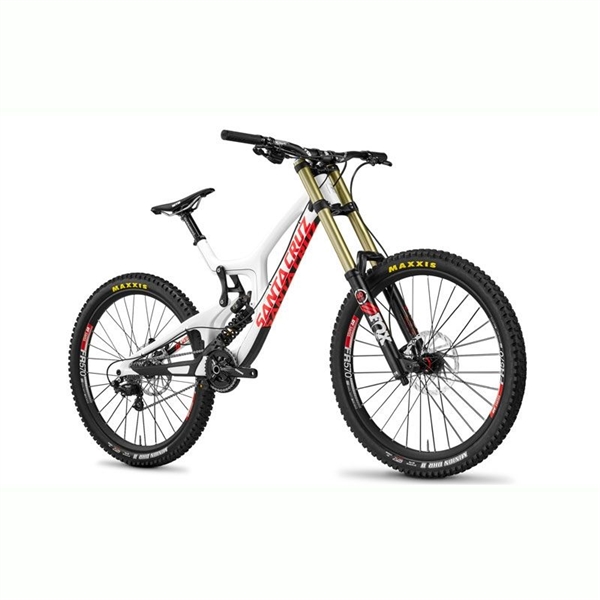
DH Bike: speed, stability, and control for extreme descents
Downhill MTBs (DH) are machines designed solely to dominate gravity and tackle the steepest and most rugged trails at maximum speed. Conceived to excel on rock gardens, roots, drops, and demanding jumps, downhill bicycles sacrifice uphill pedaling efficiency in favor of uncompromising shock absorption. The frames, made with reinforced aluminum or carbon tubing, feature ultra-slack geometries (with head angles often below 63 degrees) and extremely low centers of gravity to glue the bike to the ground. The suspensions, typically dual-crown at the front and coil at the rear, offer abundant travel from 200 mm upwards, to ensure maximum stability and traction even when the margins for error drop to zero.
Gravity components and safety in bike parks
The equipment of a downhill bike must withstand extreme mechanical stress without failing. This translates into the use of four-piston hydraulic braking systems with oversized rotors (up to 220 mm), compact drivetrains designed to prevent chain drops in bumpy sections, and reinforced rims fitted with thick-casing tires. Considering the high speeds and the technical nature of the discipline, rider safety is an absolute priority: before tackling gravity trails, it is mandatory to equip yourself with protection and MTB full-face helmets capable of dissipating the most violent impacts. If, instead, you prefer an aggressive downhill machine that also allows you to earn the summit by pedaling autonomously, we recommend looking at the Enduro MTB category, the perfect missing link between uphill efficiency and downhill adrenaline.

 +39.031.5476941